


HISTORIC VILLA
villa trestles LOCUS AMOENUS OF THE VILLAS TUSCOLANE
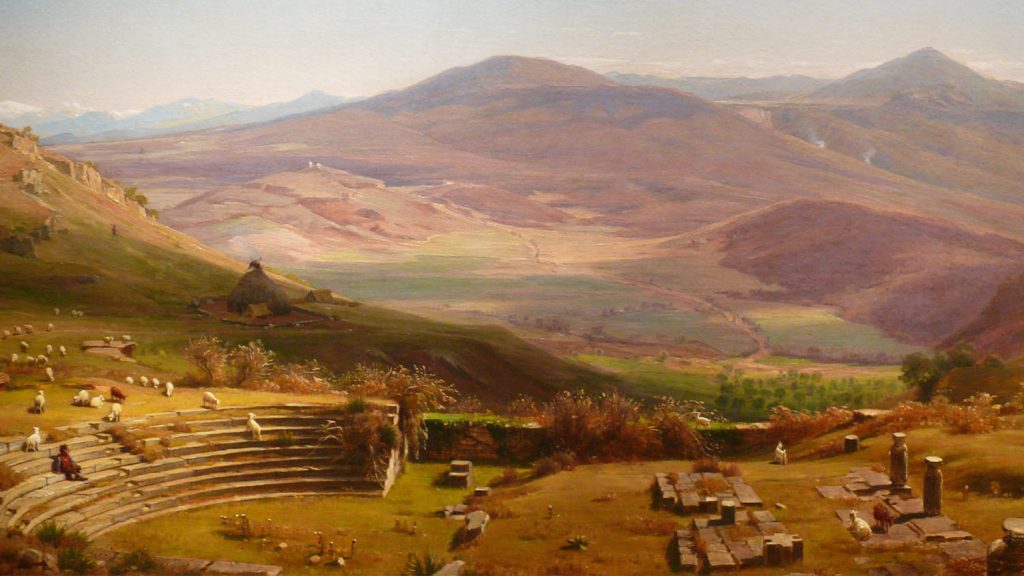
The Amphitheater of Tusculum and the Albano Mountains,
Rome Worthington Whittredge (1820–1910)
THE HISTORICAL CONTEXT
Villa Cavalletti is set in the area of the Alban Hills, an area favored since the Republican age of ancient Rome for its lush nature, scenic charm, and salubrious climate by illustrious and wealthy patricians who built sumptuous residences there in keeping with the Roman otium. In the course of the sixteenth and seventeenth centuries, what had by then also become known as the Castelli Romani were again chosen, mainly by representatives from the high clergy, belonging to aristocratic families, as the favorite places in the vicinity of Rome for the building of luxurious summer residences and aristocratic palaces later called Ville Tuscolane.
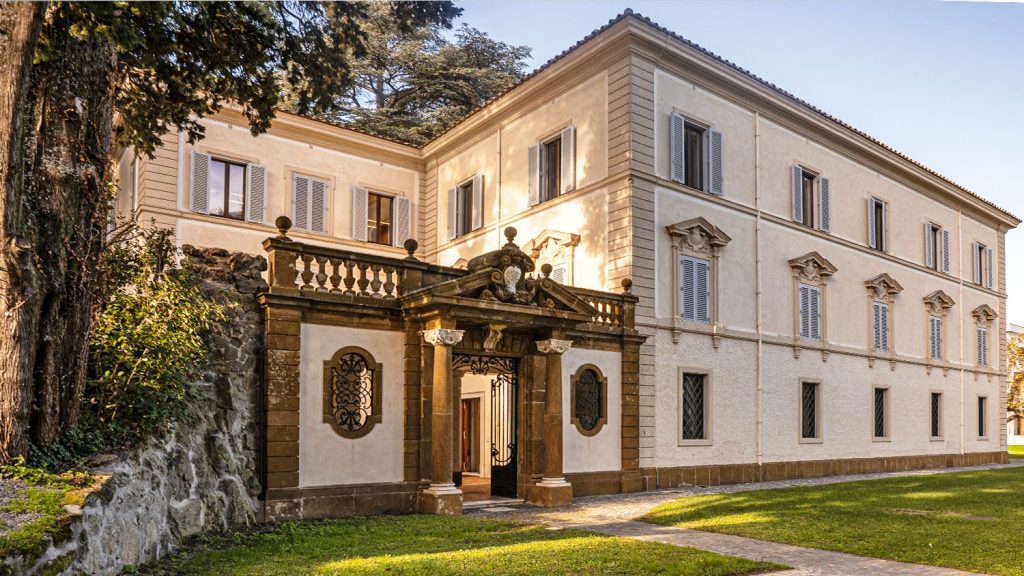
The Restored Facade of the Historic Villa
The 18th-century portal is crowned by a pediment bearing the Cavalletti coat of arms
the historic villa
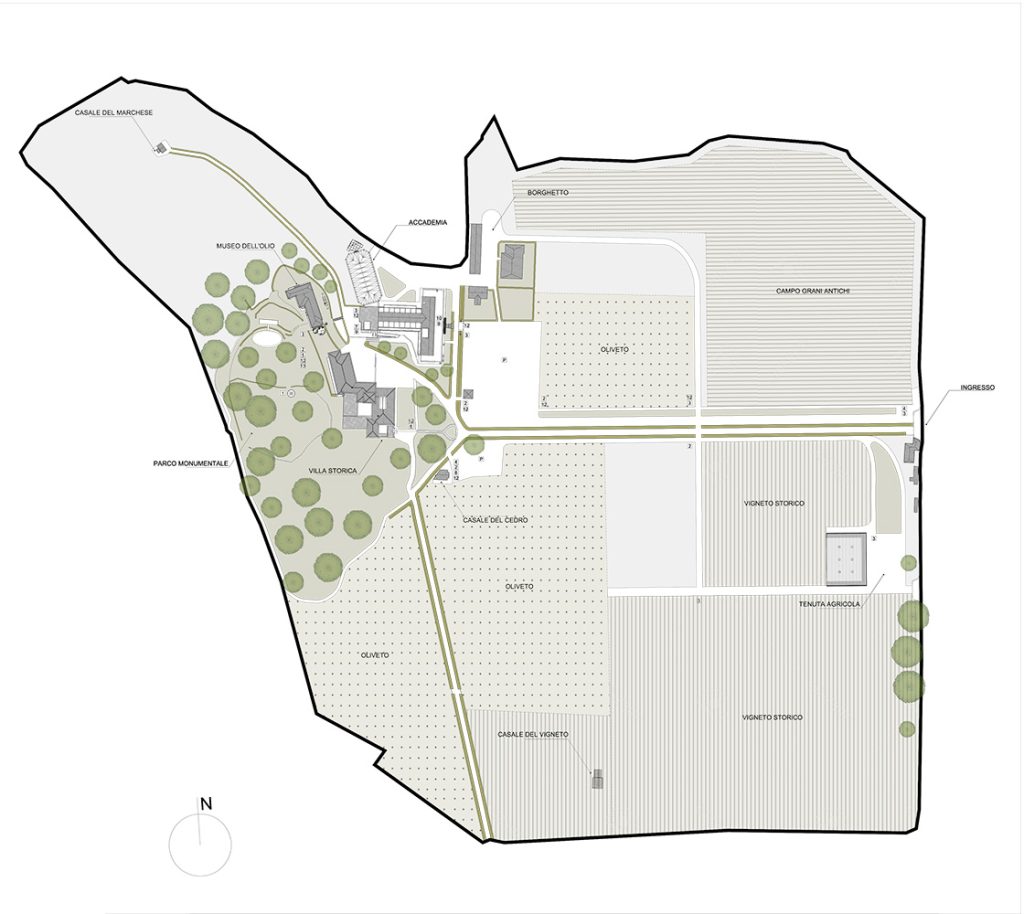
Villa Cavalletti is one of the few Tuscolan Villas that have remained intact to the present day, 27 hectares of natural beauty, a real locus amoenus: immersed in the precious park and monumental avenues and surrounded by the ancient agricultural estate with historic olive grove and vineyard, sloping down in a striking view of Rome, the sea and the Castelli Romani. The site is rich in history. Built beginning in 1580 by Cardinal Cesi as a small country house, it was purchased in 1596 by Marquis Ermete Cavalletti. Originally a modest rural residence, the villa underwent several phases of construction from the late 16th century until the 18th century, transforming into a larger and more refined noble estate with Baroque architectural details and Italianate gardens.
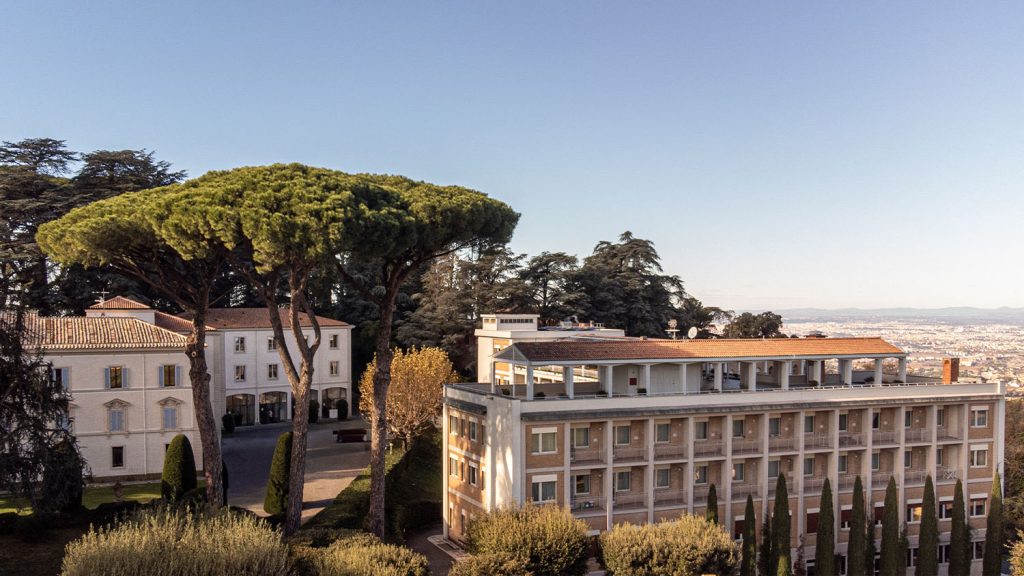
the twentieth century
Beginning in the 1960s it became the General Curia of the Society of Jesus, led by Father General Arrupe who lives there, whose meetings were attended by the future Pope Bergoglio as Father Provincial of the Jesuits of Argentina. At that time the building adjacent to the historic villa with a magnificent view of the Castelli Romani and Rome was built. Considered by the Jesuits a privileged place for spiritual exercises, from the 1980s to 2014 it became the headquarters of the German Catholic Integration Community and since 2003 the seat of the prestigious Academy for the Theology of the People of God at the instigation of then Cardinal Ratzinger, future Pope Benedict XVI. In 2012 the Community changed its headquarters, moved to Rome, the Villa Cavalletti complex had to be completely rethought.
sustainable regeneration
The revival of such an important site in terms of historical, cultural and landscape value sees a project focused on the dimensions of social, environmental and economic sustainability by preserving the identity of Villa Rurale in a continuum of meaning of the place in close dialogue with local communities. A comprehensive process of redevelopment of the complex through a green building approach for the buildings, combined with the conservative restoration of the buildings was accompanied from the landscape point of view by the census of every single essence of the historic park and the restoration and care according to the organic method of the wine and olive estate. Villa Cavalletti is now proposed as an aggregating ecosystem of community, a shared space with light boundaries and connected experiences, a place where visitors, tourists, students can feel part of, where natural and spontaneous opportunities for exchange and confrontation can be created with the favor of the sublime surrounding beauty, a source of inspiration, spirituality and meditation. The method tool developed is the sustainability protocol that guides the complex of internal activities and especially shared and developed with the community.

The > ‘s Coat of Arms and Logo
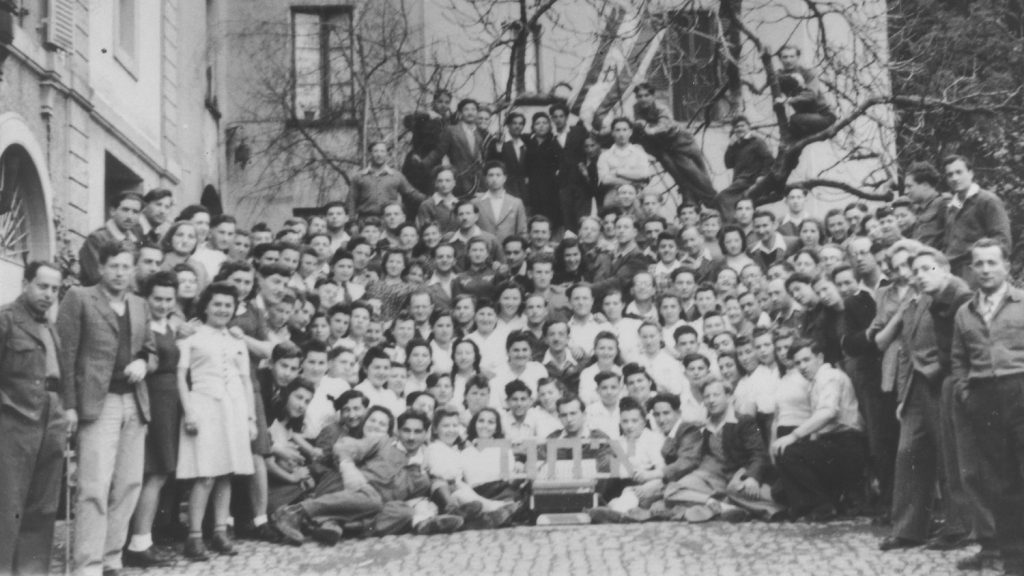
THE HISTORICAL PHOTO
In 1946, Villa Cavalletti became a place of welcome and hope for young Jewish survivors of the Holocaust. Among them were members of Kibbutz Ichud, a community preparing for emigration to Palestine and composed of refugees from Eastern Europe. A photograph preserved at the United States Holocaust Memorial Museum shows them in front of the villa shortly before the historic protest in La Spezia, which enabled over a thousand survivors to set sail toward a new life. Villa Cavalletti was thus not only a historic residence in the Castelli Romani, but also a place of rebirth, solidarity, and reconstruction following one of the greatest tragedies of the 20th century.